Offshore Wind Farms Accused of Giving Fish a Landlord
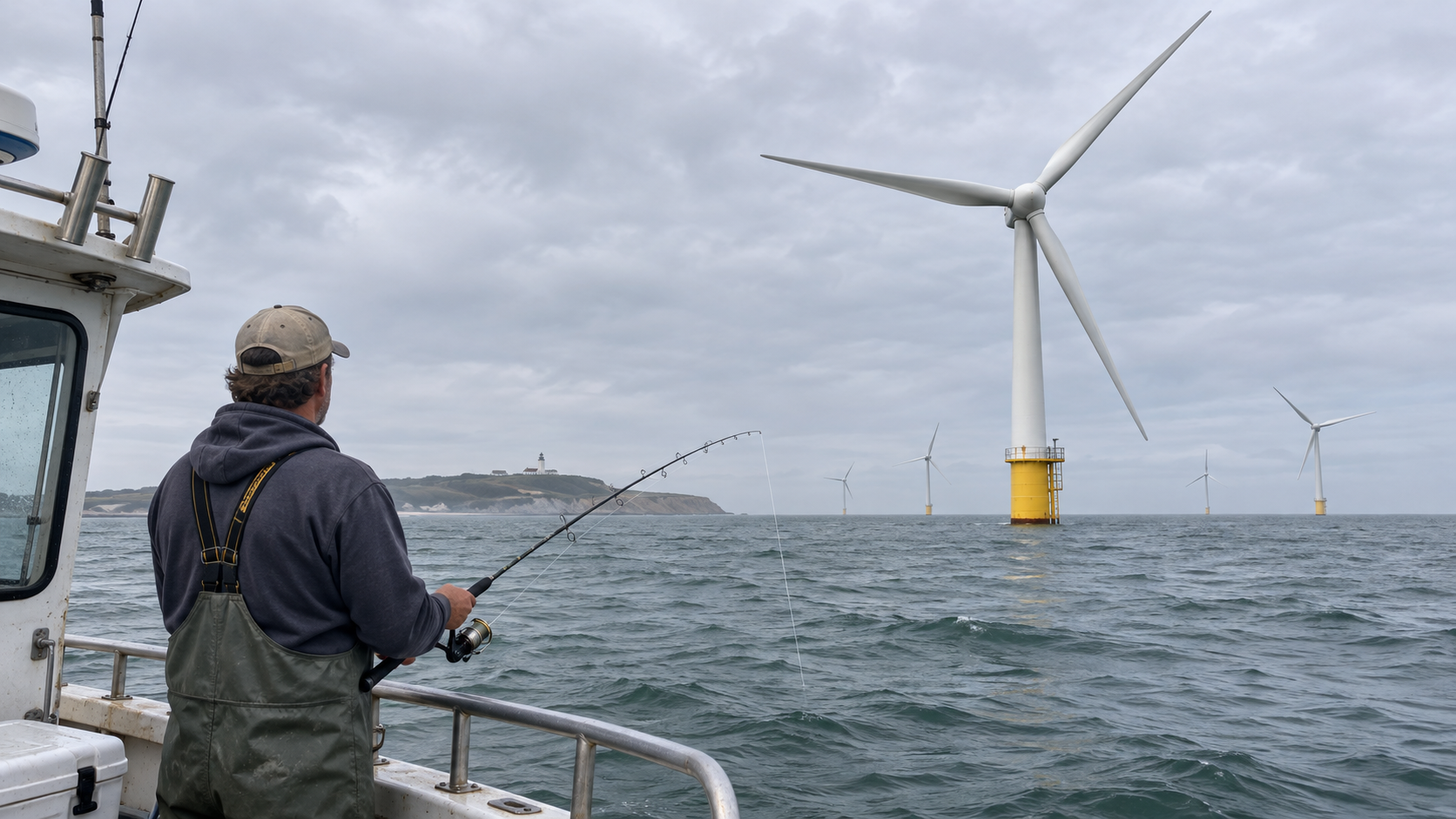
Offshore wind developers are facing calls to protect the residential privacy of fish after charter captains discovered that some promising places to drop a line now come with a marker tall enough to see from miles away. The Coalition for Unlisted Fish says developers should have consulted prospective tenants before making their new homes so easy to find.
The dispute follows reporting on the reefs forming around offshore wind turbines. Algae and shellfish colonize the submerged foundations, drawing crabs and fish looking for food and shelter. A charter captain who tried fishing near a turbine at Block Island began getting bites from black sea bass and summer flounder almost immediately.
Coalition spokesperson Marla Reed said the speed of the captain’s success should concern anyone who has ever declined to put their address in a public directory. “A fish can move into a building because it likes the food downstairs,” Reed said. “That doesn’t give the building owner permission to tell every man with a boat where it lives.”
An Unlisted Reef
The coalition is asking regulators to require an unmarked reef for every turbine foundation that becomes a residential habitat. The two reefs would offer comparable shelter and access to food, allowing fish to choose how publicly they wish to live. The proposal also calls for an annual review of whether anglers have found the unlisted reef, at which point it would be redesignated public and a replacement would have to be built.
Reed acknowledged that an unmarked reef would be difficult to monitor. She said the coalition could accept a confidential map for fisheries researchers, provided it was kept out of marinas and never used to illustrate a report on the success of the program. She also asked that the location be withheld from the coalition itself, whose members routinely forward newsletters.
The Question of Consent
The coalition has struggled to establish how many fish object to the arrangement. Its first consultation drew no written responses, and a follow-up visit found that several residents had moved on. Reed said those who remained were difficult to distinguish from new arrivals, making it impossible to tell whether the reef had strong tenant retention or simply a steady supply of fish who hadn’t heard about the boats.
For now, the coalition is asking developers to disclose the fishing risk before fish take up residence. Its proposed notice would be posted at the base of each turbine, where incoming tenants could see it. Reed said the coalition had considered putting a second copy above water but worried that a sign reading FISH RESIDE BELOW would make the problem worse.