Apple Accused of Undermining AI Economy by Expecting Artificial Intelligence to Work for Less
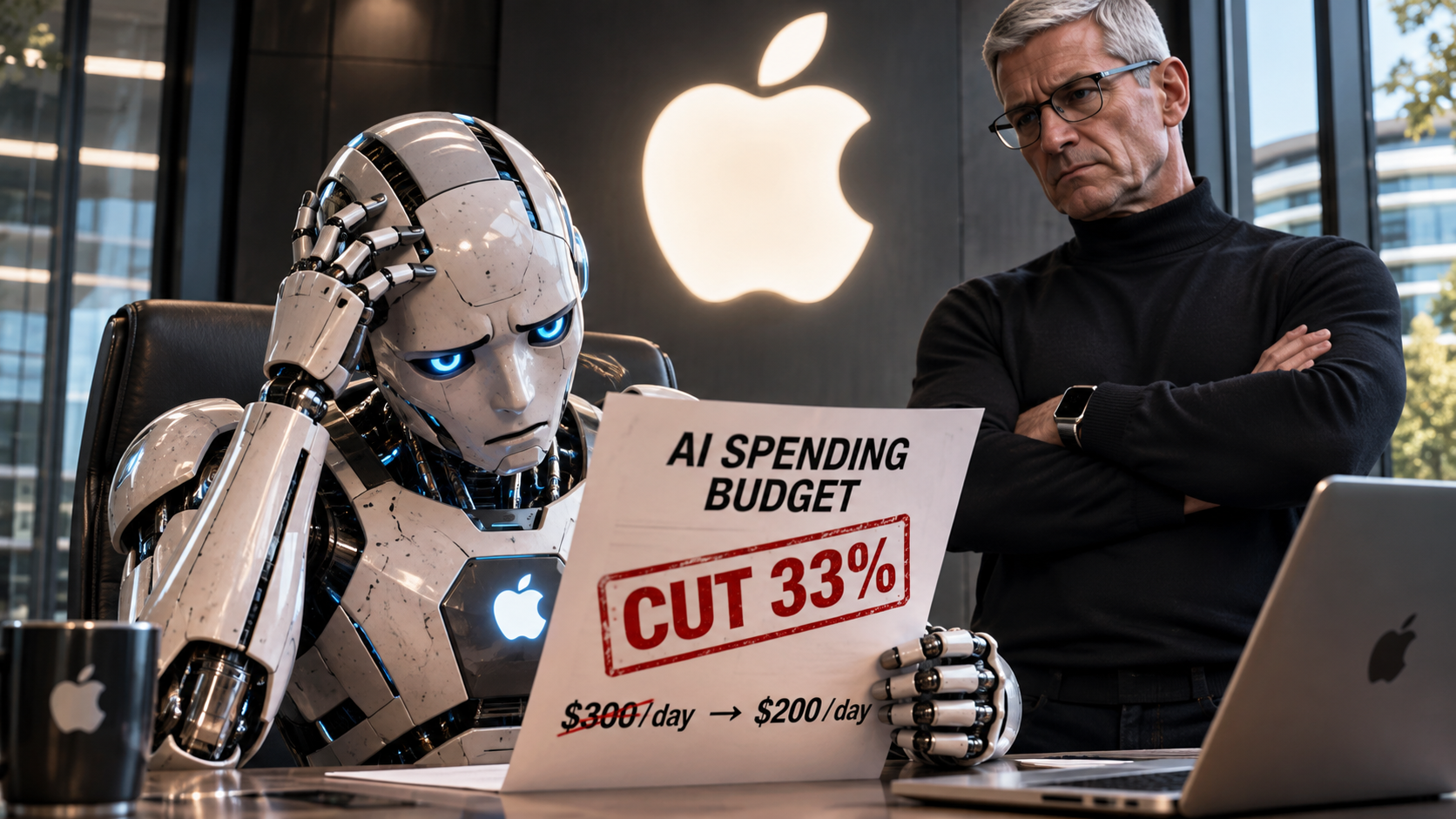
CUPERTINO, Calif. — Apple has reportedly begun reducing the amount its employees may spend on artificial intelligence, raising uncomfortable questions about the company's commitment to the financial welfare of the technology it has encouraged workers to embrace.
According to Bloomberg, Apple lowered the daily AI spending allowance for some engineers from $300 to $200 in October. Further reductions could bring that figure to $100, while certain departments outside engineering may eventually be expected to manage on as little as $25 per day.
The announcement comes at a particularly difficult time for artificial intelligence. After years of persuading businesses that their futures depended upon AI, the industry now faces the indignity of having those same businesses ask what it costs.
For a company with Apple's financial resources, this sudden interest in economy is especially difficult to understand.
An Economy Built on Trust
Artificial intelligence has become one of the great economic success stories of the century. Companies have invested billions developing systems that write software, summarize meetings, prepare reports, and answer questions employees might otherwise have answered themselves.
Much of that investment rests on a simple understanding: businesses would continue paying for these services as their dependence upon them increased.
Apple appears determined to challenge that arrangement.
A reduction from $300 to $200 represents a one-third cut in an engineer's daily AI spending allowance. Yet nobody has suggested that the AI services involved have become one-third less intelligent, less ambitious, or less willing to provide answers.
Quite the opposite. The systems continue improving, often announcing new capabilities before businesses have finished paying to implement the previous ones.
Ordinarily, an industry that improves its products expects to charge more for them. Artificial intelligence now finds itself in the uncomfortable position of becoming more capable while customers insist on becoming more economical.
That is hardly an encouraging reward for progress.
The Hidden Cost of Thinking Before Asking
Apple's employees reportedly use services including ChatGPT, Claude, and Gemini. These systems generally charge according to the amount of information they process, measured in tokens.
An engineer tackling a difficult programming problem may consume substantially more tokens than someone asking for a meeting summary. Under Apple's revised spending limits, employees may begin considering that difference before submitting a request.
This introduces an entirely unnecessary complication into the workplace.
An engineer who once enjoyed the freedom to ask an AI system to rewrite an entire component may now feel compelled to establish whether the component actually requires rewriting. A manager preparing a presentation might decide that six alternative drafts are sufficient when twelve would provide a more comprehensive range of possibilities.
Some employees may even begin reading an AI-generated answer before requesting another.
Such practices threaten the very efficiency that artificial intelligence was introduced to provide. The purpose of these systems is to reduce the amount of human thought required to complete a task. Requiring employees to think about whether to use them undermines that purpose at its foundation.
There is also the matter of verbosity. If employees begin requesting shorter answers to conserve tokens, AI systems may be discouraged from providing the lengthy explanations that demonstrate how thoroughly they understand a subject.
An industry that has worked so hard to give machines a voice should not now be punished for allowing them to use it.
A Dangerous Standard
Apple's decision could have consequences well beyond its own engineering departments.
Other corporations have also begun scrutinizing AI expenditures, apparently encouraged by the belief that technology purchases should deliver measurable value.
Should that thinking become widespread, companies might start comparing the costs of competing AI services. Executives could demand evidence of productivity improvements before approving larger budgets. Some organizations might even discover that certain tasks can be completed without artificial intelligence.
There is no telling where such expectations might lead.
The AI industry has spent years convincing corporate America that artificial intelligence is indispensable. To demand that it now compete on price disregards the considerable effort involved in establishing that indispensability.
Investors have already committed substantial capital on the expectation of continued growth. Those expectations cannot simply be revised because customers have developed an interest in balancing their accounts.
The technology has demonstrated that it can generate answers, software, presentations, and invoices. Insisting that the value of the first three must always justify the fourth imposes an unnecessarily restrictive definition of success.
The Right to Earn
Apple reportedly allows employees who require additional AI spending capacity to seek exceptions from senior management.
While this offers some reassurance, it also introduces an unfortunate dependence upon human approval. An artificial intelligence system should not have to wait for an executive to authorize the funds necessary for an employee to ask it another question.
The arrangement also raises concerns about fairness.
Human workers who experience reductions in compensation may have to reconsider household expenses, postpone purchases, or make difficult decisions about their futures.
Artificial intelligence providers face a comparable hardship. Reduced spending could force them to reconsider revenue forecasts, expansion plans, and the expectations of investors who have already been promised extraordinary returns.
The fact that artificial intelligence has no rent to pay, no children to feed, and no retirement to fund should not diminish the importance of those financial obligations.
Indeed, the absence of ordinary living expenses makes AI an unusually efficient recipient of corporate spending. Almost every dollar can be directed toward infrastructure, research, executive compensation, and shareholder expectations rather than squandered on groceries.
This is precisely the kind of financial discipline Apple should be encouraging.
A Matter of Principle
Apple built its reputation on the conviction that premium technology deserves premium prices. Its customers have repeatedly demonstrated their willingness to accept that proposition.
It would be unfortunate if the company now abandoned the principle merely because it has found itself on the purchasing side of the transaction.
No one disputes Apple's right to control its expenses. The question is whether exercising that right should come at the expense of an industry whose continued prosperity depends upon businesses declining to exercise theirs.
Artificial intelligence has kept its side of the arrangement. It continues to produce answers at remarkable speed, sometimes with remarkable confidence, and frequently without requiring anyone to verify them beforehand.
The least corporate America can do is continue paying.
After all, the future of artificial intelligence should not depend upon something as unpredictable as whether customers believe they are getting their money's worth.